Rustic Garden Fence: The Timeless Charm Of Natural Boundaries
Have you ever driven past a charming cottage and found your gaze lingering on its perfectly imperfect, rustic garden fence? That weathered wood, slightly crooked but full of personality, isn’t just a boundary—it’s a statement. It whispers stories of simpler times, handcrafted skill, and a deep connection to the land. In a world of sleek, uniform vinyl and metal, the rustic garden fence stands apart as a testament to natural beauty, organic textures, and timeless appeal. But what exactly makes a fence "rustic," and how can you harness this aesthetic to create your own slice of pastoral paradise? This guide will walk you through everything you need to know, from material selection and design principles to building tips and long-term care, transforming your garden’s edge into its most captivating feature.
The Heart of Rustic: Materials That Tell a Story
The soul of a rustic garden fence lies in its materials. Unlike manufactured products that aim for uniformity, rustic fencing celebrates the inherent character, imperfections, and natural origins of its components. The goal is to create something that looks like it has grown from the earth itself, not been assembled in a factory.
The Warmth and Wisdom of Wood
Wood is the undisputed champion of rustic fencing. Its versatility, workability, and natural aging process make it the perfect canvas. Cedar and redwood are top-tier choices for their natural resistance to rot and insects, allowing them to weather gracefully to a soft silvery-gray without chemical treatments. Pine is a more budget-friendly option but requires more diligent maintenance or pressure treatment to achieve a similar lifespan. The true rustic ethos, however, often leans towards reclaimed or salvaged wood. Old barn beams, discarded railway sleepers (after proper cleaning for creosote), or lumber from deconstructed buildings carry immense history. Each knot, nail hole, and stain tells a story, creating a fence with unmatched authenticity. For a truly handcrafted look, split-rail fencing, made by splitting logs lengthwise, is the quintessential rustic American style.
The Enduring Strength of Stone and Brick
For a more permanent, grounded feel, natural stone or reclaimed brick creates a stunning rustic boundary. A dry-stacked stone wall, with its irregular shapes and careful balancing, blends seamlessly with garden landscapes. It’s a project of patience and skill, but the result is a structure that can last centuries. Brick, especially when using a mix of sizes, colors, and orientations, can create a charming, cottage-style wall. Mortar joints should be intentionally rough and uneven to avoid a overly neat appearance. These materials are heavier and require a solid foundation, but they provide excellent wind resistance and a sense of permanence.
The Organic Flow of Willow and Living Fences
Taking the rustic concept to its living extreme, willow fencing—woven from pliable willow rods—creates a beautiful, semi-permeable screen that sways gently in the breeze. It’s a traditional European technique that feels incredibly soft and natural. Even more immersive is the living fence or hedgerow, a dense planting of shrubs like hawthorn, hazel, or privet that is regularly trimmed to form a thick, thorny barrier. This is the ultimate in eco-friendly, wildlife-supporting rustic boundaries, though it requires several years to mature and regular maintenance to keep its shape.
The Eclectic Charm of Mixed Media
Don’t be afraid to mix materials for a curated, collected-over-time look. A stone base supporting weathered wooden rails, a woven willow panel set into a timber frame, or recycled metal gates hanging on hand-hewn posts all contribute to a rich, layered rustic aesthetic. The key is to ensure the materials share a common color palette—think warm browns, grays, and natural greens—so the combination feels intentional, not haphazard.
Design Styles That Define Rustic Character
Once you’ve chosen your materials, the design dictates the fence’s personality. Rustic design rejects perfect symmetry and clean lines in favor of organic forms and functional simplicity.
The Quintessential Split-Rail and Post-and-Rail
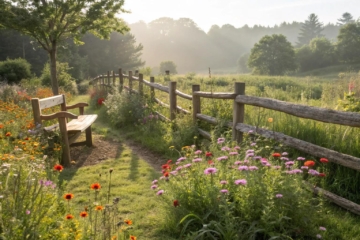
The split-rail fence is perhaps the most iconic rustic design. Its simple construction—horizontal rails fitted into vertical posts with mortised holes—is incredibly straightforward and uses minimal materials. It’s perfect for defining boundaries without blocking views, ideal for large rural gardens or as a front-yard accent. The post-and-rail variant is similar but often uses squared, milled rails for a slightly more refined (but still casual) look. Both styles are low-maintenance and allow for easy integration with climbing plants like roses or clematis.
The Rustic Picket: Imperfect and Inviting
For a more traditional garden feel, the rustic picket fence is a winner. Instead of identical, machine-cut pickets, use hand-sawn or rough-cut lumber. The pickets can be of varying widths, heights, and even slightly warped, installed with intentional gaps that are not perfectly uniform. Topping them with simple, angled cuts or leaving them flat adds to the casual vibe. This style beautifully contains flower beds or frames a pathway without feeling imposing.
The Hedge Fence: A Soft, Living Border
As mentioned, a maintained hedge is a living fence. To achieve a rustic look, avoid boxy, geometric pruning. Instead, opt for a more natural, informal shape with a slightly undulating top. Allow some flowering shrubs like lilac or forsythia to bloom within the hedge for seasonal color. This creates a dynamic, soft boundary that changes with the seasons and provides crucial habitat for birds and pollinators.
The "Collected" or "Salvaged" Fence
This is where creativity shines. It involves assembling a fence from a variety of found objects and mismatched materials. Think an old farm gate here, a section of woven lattice there, some repurposed window frames, and a stretch of simple wire fencing all artfully combined. This style tells a story of resourcefulness and personal taste. The unifying element is often a consistent paint or stain color (like a weathered white, barn red, or natural gray) applied unevenly to tie the disparate pieces together.
Building Your Own: Practical DIY Tips for a Handcrafted Look
Building a rustic garden fence is an achievable DIY project for many, especially if you embrace its imperfect nature. Here’s how to approach it.
Planning is Paramount: Start by checking local property line regulations and permit requirements. Use a string line and stakes to mark your fence line, but don’t feel obligated to follow it with rigid precision—a slight curve can enhance the rustic feel. Measure twice, cut once still applies, but allow for a bit of "character" in your cuts.
Essential Tools: You’ll need basics: a post hole digger or auger, a shovel, a level (use it, but don’t stress over 1/8th of an inch), a saw (circular or handsaw for a more authentic cut), a hammer or drill, measuring tape, and safety gear. For stone or brick work, you’ll need a mason’s hammer and trowel.
A Simple Step-by-Step (for a Wooden Post-and-Rail):
- Set Posts: Dig holes (typically 1/3 the post’s length deep, plus 6 inches for gravel drainage). Set pressure-treated or naturally rot-resistant wood posts (4x4 or round) in the holes with gravel at the bottom for drainage. Fill with soil and tamp firmly. Use a level to ensure they are plumb. Let them settle for a day or two.
- Attach Rails: Measure and mark where your rails will sit on the posts (usually one-third and two-thirds up). Using galvanized exterior screws or nails, attach your rough-sawn rails. Don’t worry if they aren’t perfectly level; a slight variation adds charm. For a split-rail look, you can simply notch the posts or use specialized rail brackets that sit on top of the posts.
- Add Details: This is where personality comes in. You can weave flexible willow branches between rails, attach reclaimed pallet wood as a infill panel, or hang vintage hardware like old horseshoes or wagon wheels.
Common Pitfalls to Avoid: The biggest mistake is aiming for perfection. Embrace knots, warps, and uneven cuts. Another is skipping the gravel drainage layer at the post base, which is the leading cause of post rot. Finally, pre-treating cut ends of wood with a preservative is crucial for longevity, even if you’re using naturally durable species.
Maintenance: Keeping the Rustic Look Fresh (Not Shabby)
A common misconception is that rustic means low-maintenance. It means different maintenance—focused on preserving a natural, aged look rather than a pristine one.
Seasonal Care:Spring is for inspection. Look for loose rails, cracked wood, or shifting stones. Clear away any climbing plant debris that could trap moisture. Summer involves managing vegetation—keep vines from growing behind the fence where they can push it apart, but let them grow on it for charm. Fall means clearing leaves and debris that can stain or rot wood. Winter is for checking for damage from snow or ice.
Cleaning and Staining: Over time, wood will turn gray. If you prefer to maintain a warmer, honey-brown tone, you’ll need to clean and reapply a penetrating stain or oil every 2-3 years. Use a deck brush to scrub with a mild cleaner (or a vinegar/water solution for a natural approach). For a truly authentic, weathered silver-gray look, simply let nature take its course. An annual rinse with a garden hose is often enough. Avoid power washing, as it can damage the wood fibers.
Repairing Damage: A broken rail in a rustic fence is an opportunity for a salvaged replacement that adds more character. Keep a small stock of matching scrap wood or have a source for old barn wood. For stone walls, reset any loose stones with a mortar mix designed for stone or re-stack dry-laid stones. The repair should be noticeable but harmonious.
When to Replace: Even the best-maintained rustic fence has a lifespan. Wood typically lasts 15-20 years with good care; stone can last 100+; willow needs full replacement every 5-10 years. When repairs become constant and structural integrity is compromised, it’s time for a rebuild, often using the old materials as a base for a new, layered look.
Landscaping Integration: Making Your Fence Part of the Garden
A rustic garden fence shouldn’t exist in isolation; it should be an integral, living part of your garden ecosystem.
Climbing Plants: This is the easiest and most beautiful integration. Roses (especially old-fashioned varieties like climbers or ramblers), clematis, honeysuckle, and jasmine can be trained to grow on and over the fence, softening its lines and adding fragrance and seasonal color. For a more informal look, let vining vegetables like peas, beans, or cucumbers scramble up it—a perfect blend of beauty and function.
Border Gardens: Plant a perennial border directly against the fence. Use a mix of heights: tall delphiniums or hollyhocks at the back, mid-height lavender or salvia, and low cranesbill or dianthus at the front. The fence acts as a backdrop, making the plants pop. For a truly cottage-garden feel, let some plants like poppies or foxgloves self-seed and emerge spontaneously along the fence line.
Lighting and Decor:String lights or solar-powered lanterns hung on fence posts create magical evening ambiance. Hanging baskets, bird feeders, or vintage tools (like an old hoe or scythe) can be affixed to posts. A simple wooden bench placed perpendicular to the fence creates a cozy nook. The key is to keep decorations rustic and weathered—think galvanized metal, aged wood, and terracotta.
Blending with Hardscaping: If your garden has stone patios or brick pathways, echo those materials in your fence. A low stone knee-wall topped with a wooden rail connects the patio to the garden. A brown, weathered fence can serve as a backdrop for a gravel garden, helping to set off drought-tolerant plants like sedum or yarrow.
Privacy vs. Openness: Finding the Right Balance
One of the primary functions of any fence is to create privacy or define space. With a rustic fence, this is achieved through design and layering, not solid panels.
Solid vs. Open Designs: A solid board fence can be made rustic by using rough-cut, uneven boards with variable gaps. However, true rustic style often favors openness. Split-rail, post-and-rail, and picket fences provide a sense of enclosure without feeling like a barrier. They allow for visual connection between your garden and the surrounding landscape, which is a key principle of naturalistic design.
Layering for Privacy: The most effective rustic privacy solution is layering. Start with your open fence design. Then, plant a dense, evergreen hedge (like yew or holly) directly behind it, or train dense climbing vines (like ivy or climbing hydrangea) to cover it completely. This creates a living wall that is soft, dynamic, and teeming with life, while the rustic fence structure in front provides the framework and a sense of depth. You can also plant tall, clumping grasses like miscanthus in front of and behind the fence to create a soft, swaying screen.
Using Foliage as the Screen: In some cases, you might forgo a traditional fence altogether and use a dense planting of shrubs or bamboos (clumping varieties only) as your boundary, contained by a simple, rustic low rail or wire to define the edge. This is the ultimate in organic privacy.
Local Regulations: Always check your local zoning laws or HOA rules regarding fence height, materials, and set-back requirements. Rustic fences, especially those under 4-6 feet, are rarely an issue, but it’s a critical first step before any planning.
Sustainability: Eco-Friendly Rustic Fencing
The rustic aesthetic aligns perfectly with sustainable gardening practices. Its emphasis on natural, local, and reclaimed materials makes it an environmentally conscious choice.
Reclaimed is King: Using salvaged barn wood, old fencing, or recycled timbers is the pinnacle of sustainability. It keeps materials out of landfills and gives them a new life. Look for deconstruction companies or architectural salvage yards. Ensure the wood is free of hazardous treatments like old creosote (common in railway sleepers) or CCA (chromated copper arsenate, used in old pressure-treated wood pre-2004).
Locally Sourced Materials: Choose stone from a local quarry or wood from a nearby sawmill to minimize transportation carbon footprint. Willow can often be harvested sustainably from local coppices.
Low-Impact Treatments: If you must treat wood, opt for natural oils (like linseed or tung) or plant-based stains over synthetic, chemical-heavy sealants. Charring wood (a Japanese technique called shou sugi ban) is a beautiful, natural way to preserve and protect wood without chemicals, creating a striking blackened finish that weathers gracefully.
Living Fences as Carbon Sinks: A hedgerow or living fence actively sequesters carbon, supports biodiversity (providing food and shelter for birds, insects, and small mammals), and manages water runoff. It’s a dynamic, living ecosystem component rather than a static structure.
End-of-Life Cycle: Consider the future. A wooden rustic fence can eventually be chipped for mulch or burned for heat (if untreated). Stone walls can be disassembled and reused. Design with disassembly in mind, avoiding permanent, non-reversible connections like excessive concrete.
Common Mistakes to Avoid When Creating Your Rustic Fence
Even with the best intentions, some missteps can turn a charming rustic fence into an eyesore. Here are the most common pitfalls.
Mistake 1: The "Too-Clean" Look. Over-sanding, perfectly aligning every post, and using uniform, new lumber kills the rustic vibe instantly. Embrace the gnarled knot, the slight warp, the varied width. Let the materials’ natural state shine through.
Mistake 2: Ignoring the Terrain. Building a perfectly level fence on a sloping site creates awkward, floating rails. Follow the land’s contour. Step the fence on steep slopes or use a "rack" (angled) design where rails and pickets follow the hill. This looks more natural and structurally sound.
Mistake 3: Poor Post Installation. No amount of beautiful wood can save a fence with wobbly, rotting posts. Invest time and proper materials here. Use gravel for drainage, set posts deep enough (below frost line in cold climates), and ensure they are plumb before backfilling. This is the non-negotiable foundation.
Mistake 4: Overlooking Drainage. Water pooling at the base of a fence is a death sentence. Ensure the soil slopes away from the fence line. For low areas, consider a French drain or simply create a small, planted swale to direct water. Don’t pile mulch or soil against the fence itself; leave a few inches of air gap.
Mistake 5: Forgetting the "Softscape." A bare rustic fence can look sparse, especially in its first few years. Plan your plantings from day one. Install supports for climbers immediately. Plant shrubs and perennials at the base to soften the transition from fence to garden. This integration is what makes it feel like a garden element, not just a boundary.
Mistake 6: Using Incompatible Materials. Mixing a bright, shiny new aluminum gate with a 100-year-old reclaimed oak fence creates a jarring clash. Maintain a cohesive material and color palette. If introducing a new element, distress it (with sandpaper, wire brushing, or leaving it to weather) to match the existing patina.
Conclusion: More Than a Boundary, a Legacy
A rustic garden fence is so much more than a practical boundary marker. It is a philosophy made manifest—a celebration of nature’s irregularities, a nod to craftsmanship, and a commitment to creating a space that feels authentically yours. It connects your garden to the landscape, tells a story through its materials, and provides a living canvas for plants to climb and bloom. Whether you build a simple split-rail boundary from locally milled cedar, weave a living hedge of hawthorn, or painstakingly assemble a wall from salvaged barn stone, you are creating a legacy. You are investing in a feature that will evolve, weather, and gain character alongside your garden itself. So, look at that empty edge of your plot not as a problem to be solved with the cheapest panel, but as a blank canvas for your most creative, sustainable, and soulful gardening statement yet. Start with the materials that speak to you, embrace the beautiful imperfections, and watch as your rustic garden fence becomes the beloved, defining heart of your outdoor sanctuary.