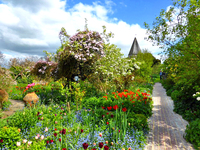
The Charleston Farmhouse Garden: A Timeless Blueprint For Southern Style
What is it about a Charleston farmhouse garden that captivates the imagination and feels so effortlessly timeless? It’s more than just a collection of plants; it’s a living narrative of history, climate, and a relaxed, gracious way of life. This iconic garden style, born from the Lowcountry’s unique challenges and charms, offers a masterclass in creating beauty that is both resilient and romantic. It’s a design philosophy that embraces organized chaos, where formality bows to nature and every path invites a slower pace. For those seeking to cultivate a slice of Southern serenity, understanding the core principles of the Charleston farmhouse garden is the first step toward transforming any outdoor space into a personal sanctuary.
This style isn’t about rigid symmetry or high-maintenance displays. Instead, it’s a practical, beautiful response to a subtropical environment—a dialogue between the gardener and the land that has evolved over three centuries. It tells a story of utility meeting elegance, where herb gardens supplied the kitchen, hedges provided windbreaks, and flowering vines softened the harshness of brick walls. To recreate this look is to adopt a mindset: one of patience, observation, and a deep appreciation for the subtle, seasonal rhythms of the South. Let’s delve into the essential elements that define this beloved aesthetic and learn how to adapt its wisdom for modern gardens.
The Historical Roots: From Utility to Icon
The story of the Charleston farmhouse garden is intrinsically tied to the history of the South Carolina Lowcountry. Its origins lie in the practical needs of 18th and 19th-century settlers and planters. Gardens were placed not just for beauty, but for survival and comfort. They were strategically located near the house for easy access, often enclosed by walls or hedges to shield from the relentless sea breezes and create a protected microclimate. This enclosure was the first step in crafting a private, productive oasis.
The Foundational Design Principles
The classic layout is deceptively simple. It typically features a central axis—a straight gravel or brick path leading from the front door through the garden—flanked by symmetrical, geometric beds. However, unlike the formal French gardens it slightly echoes, the planting within these beds is lush, abundant, and slightly unstructured. Think of it as "orderly abundance." The paths are often lined with low-growing, clipped hedges like boxwood (Buxus), but these are not the sole protagonists. They are the framework upon which a tapestry of native and heirloom plants is draped.
Another key principle is the "garden room" concept. Larger properties use walls, fences, trellises, and dense plantings to divide the garden into intimate, discoverable spaces. This creates a sense of mystery and progression, a hallmark of the style. You might find a secret garden with a bench, a productive potager (kitchen garden), and a shaded bower for afternoon tea, all connected by winding paths. This design encourages exploration and makes even a modestly sized plot feel expansive and layered.
Materials That Tell a Story
Authentic Charleston gardens are a study in humble, weathered materials that age gracefully. Tabby concrete (a local mix of oyster shells, lime, and sand) is used for walls and walkways. Brick, often salvaged and unevenly laid, provides warm, earthy tones underfoot. Crushed shells from local rivers make charming, crunchy pathways that speak directly to the coastal location. Wood is used for arbors, gates, and benches, left to silver naturally or painted in soft, muted colors like Charleston green (a nearly black green) or pale grays. These materials aren’t just decorative; they are a direct link to the region’s geology and history, creating an aesthetic that feels rooted and authentic, never artificially pristine.
The Plant Palette: A Celebration of the Lowcountry
The soul of a Charleston farmhouse garden is undoubtedly its plant selection. It’s a curated mix of native species perfectly adapted to the heat, humidity, and sandy soil, alongside cherished heirloom cultivars brought by early settlers and still beloved today. The goal is year-round structure with spectacular seasonal bursts.
Evergreen Backbone and Structure
Year-round greenery provides the essential skeleton. Southern magnolia (Magnolia grandiflora) is the undisputed queen, with its glossy, dark leaves and enormous, fragrant white blooms. Live oak (Quercus virginiana) draped with Spanish moss (Tillandsia usneoides) creates majestic, shady canopies. For hedges and screens, yaupon holly (Ilex vomitoria) is a native workhorse, while sweet olive (Osmanthus fragrans) offers a heavenly, apricot-like fragrance nearly year-round. Camellias (Camellia japonica and Camellia sasanqua) are non-negotiable, providing a spectacular show of blooms from fall through spring, long before most other shrubs flower.
The Romantic Flowering Core
This is where the garden comes alive with color and perfume. Gardenias (Gardenia jasminoides) are iconic, their creamy white flowers and intoxicating scent defining Southern summers. Hydrangeas, particularly the bigleaf hydrangea (Hydrangea macrophylla), are a staple, their mophead blooms shifting from pink to blue based on soil acidity. Roses, especially old-fashioned Damask roses and China roses, are grown for their fragrance and form, often trained on arbors or pillars. Azaleas (Rhododendron spp.) paint the spring landscape in vibrant waves of pink, purple, and white. Confederate jasmine (Trachelospermum jasminoides) climbs walls and fences, blanketing them in star-shaped white flowers with a rich perfume.
The Essential "Weeds" and Self-Sowers
A true Charleston garden has a soft, relaxed feel because it allows certain plants to self-sow and naturalize. Butterfly weed (Asclepias tuberosa) with its brilliant orange flowers, black-eyed Susans (Rudbeckia hirta), and purple coneflower (Echinacea purpurea) pop up in cheerful drifts. Ferns, like the southern shield fern (Dryopteris ludoviciana), thrive in shady, moist spots, adding delicate texture. Sweet pepperbush (Clethra alnifolia) attracts pollinators with its fragrant summer spikes. Embracing these "volunteers" is key to achieving that effortless, lived-in look.
Seasonal Rhythm: A Garden for All Four Seasons
A common misconception is that Southern gardens are only for spring and summer. The Charleston farmhouse garden is designed for four-season interest, a testament to its thoughtful planning.
Winter is not a dormant void. The focus shifts to bark, form, and evergreen foliage. The striking, cinnamon-colored bark of river birch (Betula nigra), the architectural tiers of Japanese maple (Acer palmatum), and the vibrant red berries of winterberry holly (Ilex verticillata) provide color. Camellias are in their prime, and the skeletal beauty of deciduous trees and vines (like the hardy crossvine) creates graphic patterns against walls.
Spring is an explosion, led by azaleas and dogwoods (Cornus florida). Flowering quince (Chaenomeles speciosa), spirea, and forsythia add early yellows and pinks. Bulbs like daffodils (Narcissus) and crocus are planted in fall to naturalize under trees and in borders.
Summer is dominated by the heady fragrances of gardenias, magnolias, and sweet olives. Crape myrtles (Lagerstroemia) provide long-lasting summer color in shades of pink, purple, and white. Plumbago (Ceratostigma plumbaginoides) offers true blue flowers, while lantana and salvia attract hummingbirds and butterflies, thriving in the heat.
Fall brings a second wave of camellias and the brilliant foliage of sourwood (Oxydendrum arboreum) and red maple (Acer rubrum). Asters and chrysanthemums provide late-season color. The focus again turns to texture and the golden light filtering through longleaf pine and oak canopies.
Adapting the Style: Modern Interpretations and Practical Tips
You don’t need a historic Charleston peninsula home to embrace this aesthetic. The principles are wonderfully adaptable to spaces large and small, from a urban courtyard to a suburban lot.
Start with the Framework
Begin by establishing your garden's "bones." This could be a simple gravel path edged with low liriope or mondo grass, a white picket fence painted Charleston green, or a series of large pots in classic shapes (terracotta, lead-colored) that anchor corners. Install a rustic arbor at a garden entrance or over a path, immediately creating that signature look. Even a small space can have a "room" defined by a trellis or a dense shrub like a burford holly.
Embrace the Right Plants
The single biggest mistake is choosing plants unsuitable for your climate. The Charleston palette thrives in USDA zones 8-10. If you live in a cooler zone, seek out cold-hardy cultivars of favorites: look for hardy camellias (Camellia oleifera), Rosa 'Old Parchment' (a disease-resistant old-rose type), and Hydrangea arborescens ('Annabelle') for shade. Always prioritize native plants for your specific region—they require less water and care and support local wildlife. For example, in the Midwest, substitute serviceberry (Amelanchier) for magnolia and false indigo (Baptisia) for butterfly weed.
The Art of "Controlled Neglect"
This is the secret sauce. The Charleston garden looks best when it feels slightly unkempt. Allow perennials to flop into paths. Let a few self-sowing annuals like cleome or cosmos appear where they will. Mulch heavily with pine straw or shredded bark to suppress weeds and retain moisture, giving the garden a soft, uniform blanket. Deadhead spent blooms selectively to encourage reblooming on plants like roses and hydrangeas, but leave some seed heads for winter interest and birds. The goal is abundance, not perfection.
Water Wisdom
Lowcountry gardens are designed for periods of drought. Incorporate rain gardens in low spots to capture runoff. Group plants with similar water needs (hydrozoning). Use drip irrigation or soaker hoses to water deeply at the root zone, minimizing evaporation. Gracious water use is part of the tradition—think of the old rain barrels under downspouts to fill watering cans for the kitchen garden.
Addressing Common Questions
Q: Is this style too high-maintenance with all the hedges and flowers?
A: Not if designed correctly. The key is choosing climate-appropriate, disease-resistant plants and using native species. A well-planned Charleston garden uses layering (trees, shrubs, perennials, groundcovers) to naturally suppress weeds. The "hedges" are typically slow-growing boxwood, requiring only a light annual shear. The abundant planting shades the soil, reducing watering and weeding. It’s more about smart planning than constant labor.
Q: Can I create this look in a small space?
A: Absolutely. Focus on the essence: a defined path, a strong evergreen anchor (like a large pot with a clipped boxwood or a small evergreen shrub), a signature fragrant plant (a single gardenia in a pot by the door), and a limited, harmonious color palette. Use vertical space with a trellis for jasmine or a climbing rose. Create the illusion of a "room" with a half-wall or a dense, tall hedge at the back of a small patio.
Q: What about pests and diseases in a humid climate?
A: The traditional garden copes through biodiversity and air circulation. Avoid planting large monocultures. Ensure plants are spaced properly to allow air to flow, reducing fungal issues. Encourage beneficial insects by planting a diversity of flowers. Many native plants have built-in resistance. Accept that some cosmetic damage (like a few chewed leaves) is part of a garden that supports wildlife—it’s a sign of a healthy ecosystem.
Q: How do I make it feel more "modern"?
A: Blend the classic framework with a contemporary plant palette or hardscaping. Keep the symmetrical path and clipped hedges but fill beds with a monochromatic scheme of grasses (like muhly grass, Muhlenbergia capillaris) and perennials in shades of white and silver. Use concrete pavers instead of brick for paths. Incorporate sculptural elements—a single, large, glazed pot, a modern metal bench. The structure remains, but the filling is updated.
Conclusion: Cultivating a Legacy, Not Just a Garden
The enduring allure of the Charleston farmhouse garden lies in its profound simplicity and deep connection to place. It is not a style imposed upon the landscape, but one that emerges from it—a conversation between human intention and natural resilience. It teaches us that beauty is found in patience (waiting for a century-old live oak to cast its shade), in utility (the kitchen herb garden just steps from the back door), and in graceful impermanence (the fleeting, exquisite bloom of a magnolia flower).
By adopting its core tenets—a strong, simple framework; a plant palette that celebrates local heroes; an embrace of seasonal change; and a philosophy of generous, relaxed abundance—you create more than an attractive yard. You cultivate a sanctuary. You build a legacy of stewardship and style that will mature and charm for generations. It is a timeless blueprint, not for a perfect picture, but for a perfectly lived-in life, where every garden path invites you to pause, breathe, and connect with the gentle, enduring rhythms of the natural world. Start with one clipped hedge, one fragrant gardenia, one winding shell path, and let the story unfold.